Notes from a Lake: The Crows and the Stickleback
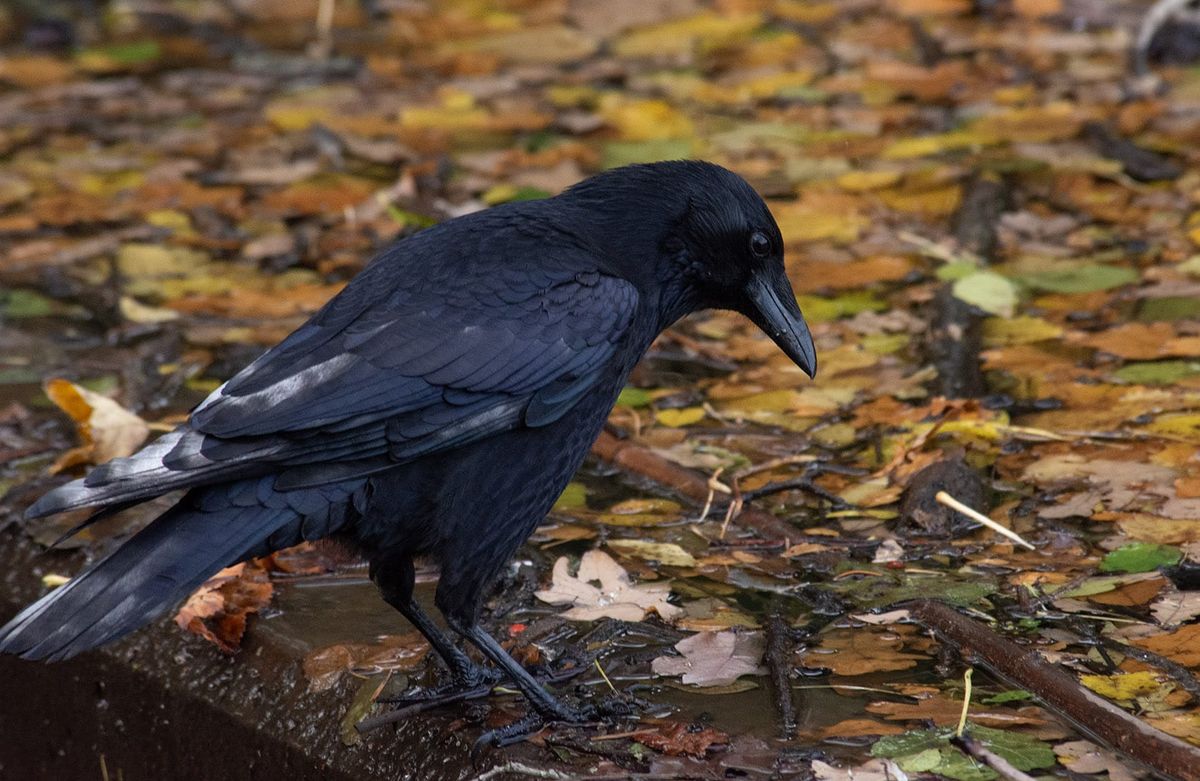
Crows are highly adaptive birds and extremely clever. But the crows of the lake are especially clever, although the stickleback fish may not be too happy about that...
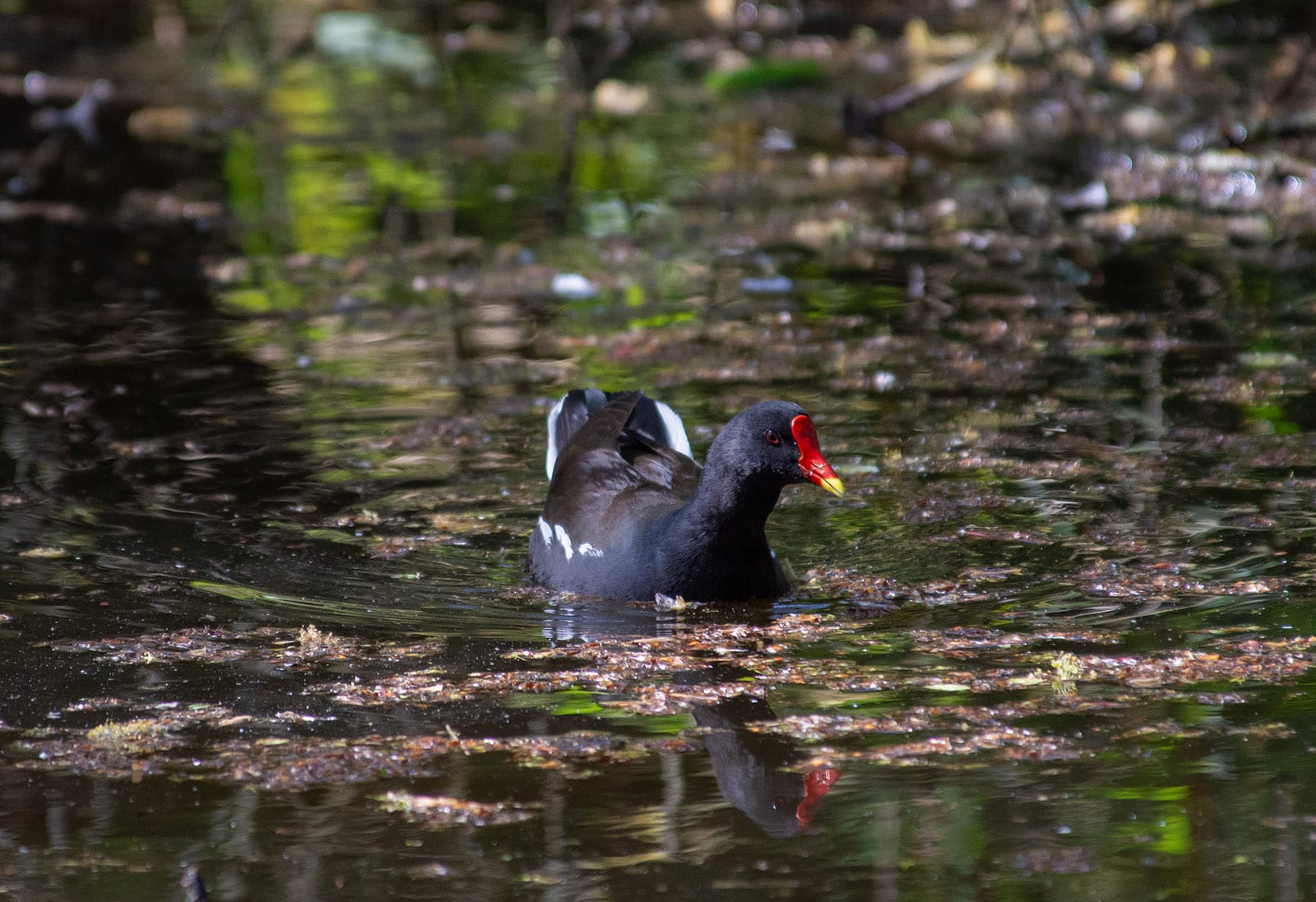
A couple of months ago, I noticed a crow at the water’s edge. An area by the weir, a bank darkened by the many trees – alder, beech, oak, willow and others – and dampened by a nearby backchannel of the lake. It is a popular spot, both for the shyer birds and for birds hunting and fishing. I often see grey wagtails bopping around as well as mallards and moorhens poking about, looking for tasty morsels whilst comforted by the seclusion of the area.
Some sunlight does manage to poke through the canopy, to warm up a section of the bank and a small partially submerged tree branch. In the summer, dragonflies will rest or mate in this section of warmth and the little grebes will wait to catch the odd insect in flight or while resting on some pendulous sedge.
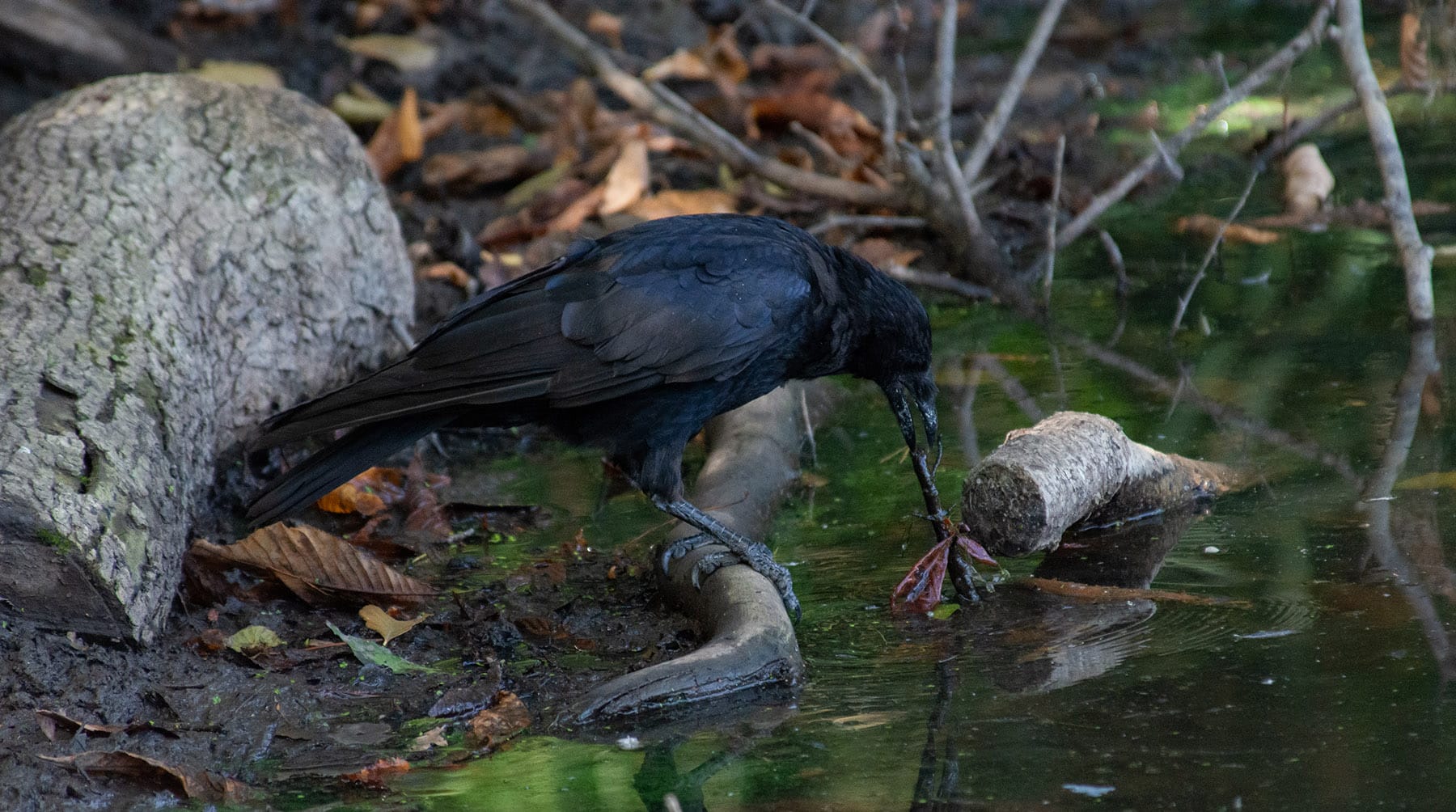
At this time, the lake water level was low because of the prolonged heat and drought of the summer. The weir was dry and more bank area was exposed by the receding water. The crow wandered to the edge of the lake, stood on a small wobbly log and stared into the water. She dunked her head in a bit and brought up a twig.
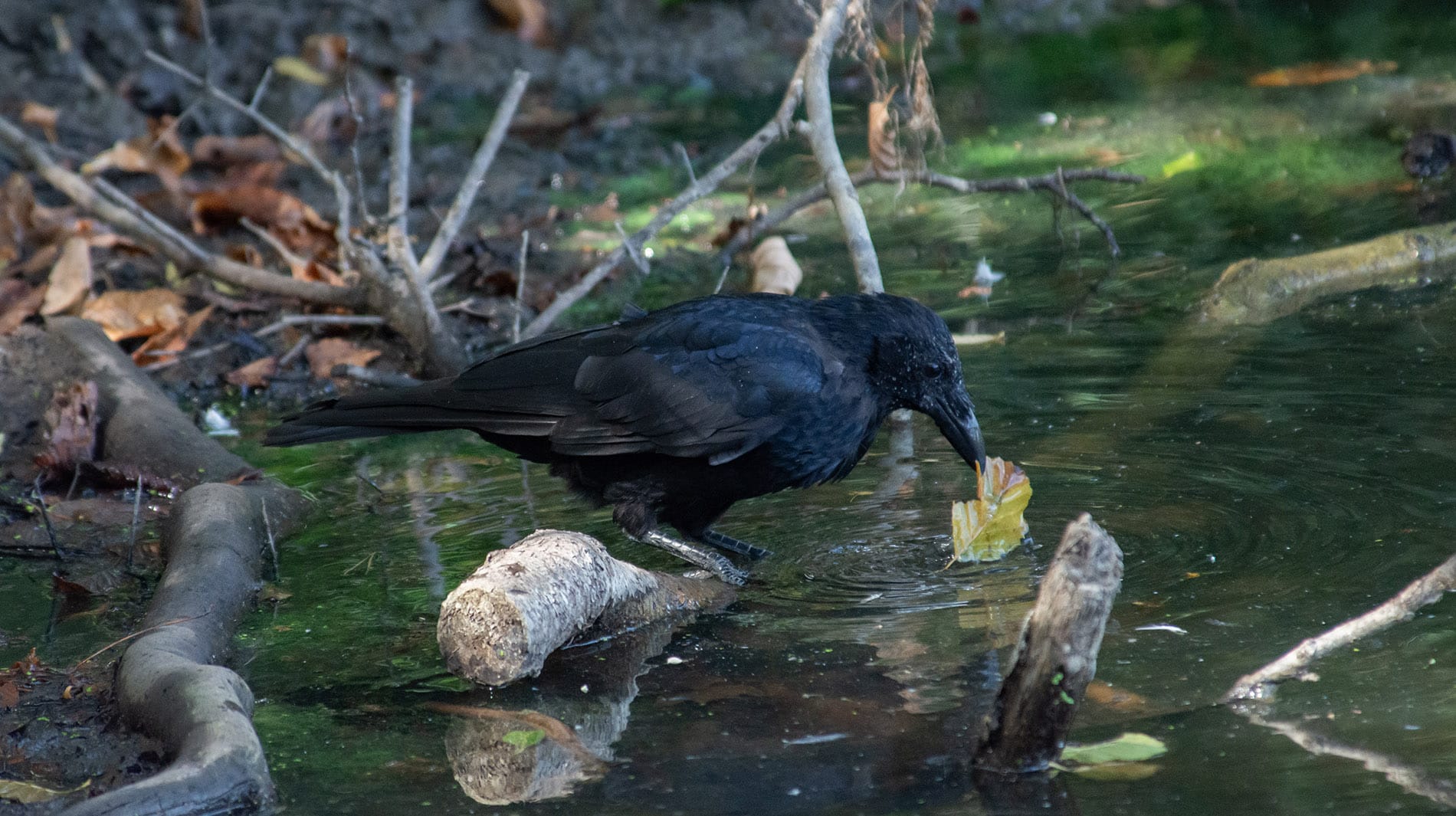
She let it go. Hopped to a nearby log and dunked her head in again, this time bringing up a leaf. As you do.
She then fully submerged her head into the lake and came up with, well nothing.
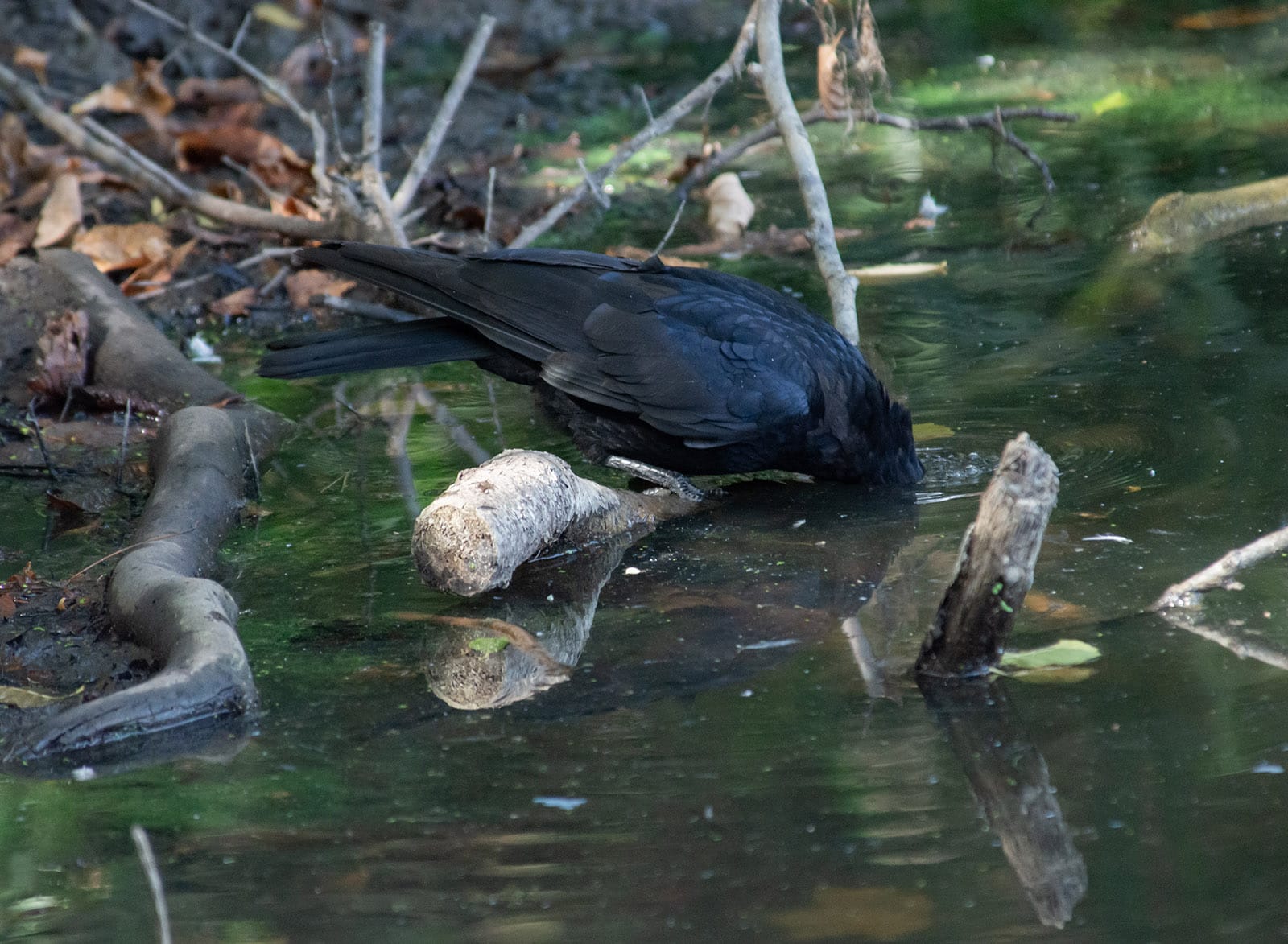
I watched her antics for a bit, took some photos of course. I assumed that she was playing a game – bobbing for leaves. And why not? It was a warm day and a great way to keep cool and amused.
A couple of months later, in early November, I saw a different crow on the secluded bank. Different, you ask? How could I possibly know? Aren’t they all black? Well…
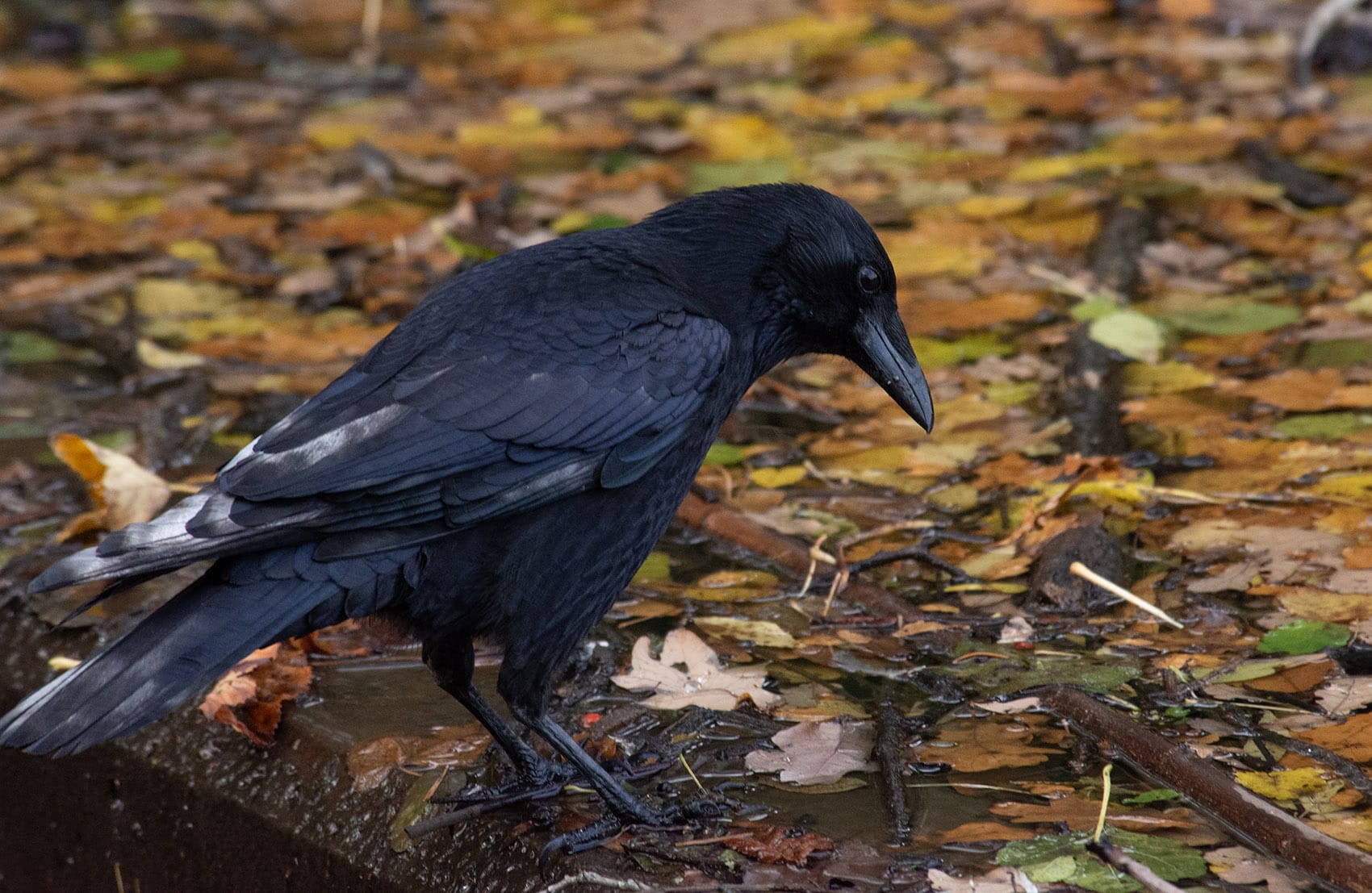
As you can see, this gorgeous crow has a bit of white on his feathers. No, he’s not some sort of magpie/crow hybrid. Rather it is something akin to albinism known as leucism. So he’s got a few white feathers rather than being all white as would happen with albinism. It’s interesting, we seem to have quite a few crows in the area with leucism. I am not sure how common it is in the general population or if it is something to do with the genetics of our local crows. Our birds are weird here, so a genetic quirk would not be that surprising to be fair.
But anyway, I digress. It wasn’t his feathers that made this one stand out to me. It was his behaviour.
He flew down to the same bank as the previous crow, pecking about. Then he hopped over to the weir edge. The water levels had risen in the last couple of months, so that the water was now reaching the top of the weir again. And it being autumn, there were leaves galore on the ground and on the water, making a mosaic of reds, yellows, browns and greens. I stood, watching and waiting with the camera, assuming that the crow would commence with a game of bobbing for leaves.
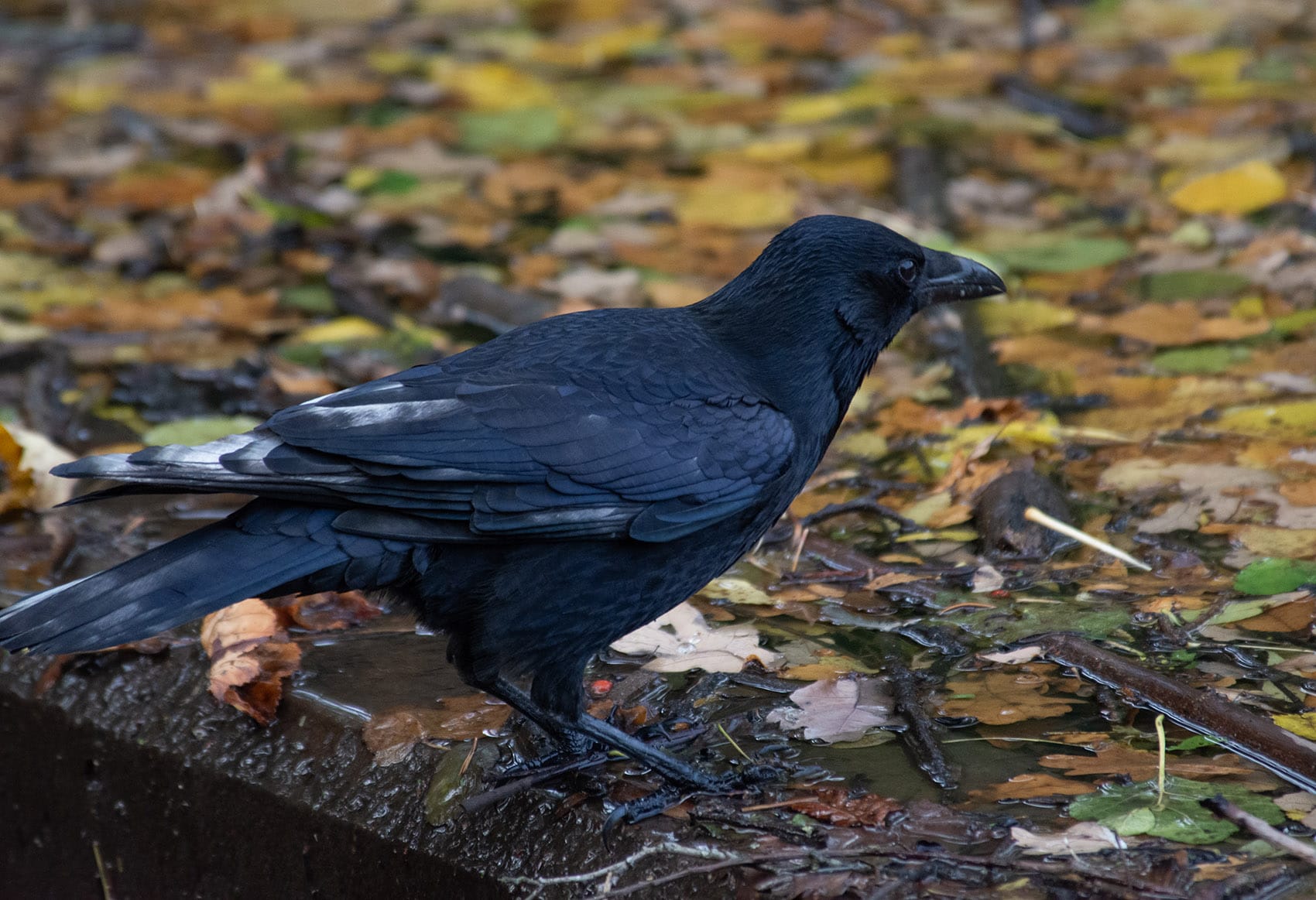
Oh dear reader, how wrong I was!
The crow stared intently at the lake surface and then stabbed his beak quickly into the water. I thought he came up empty-beaked, as it were. I was to find out later that this was not the case. Read on!
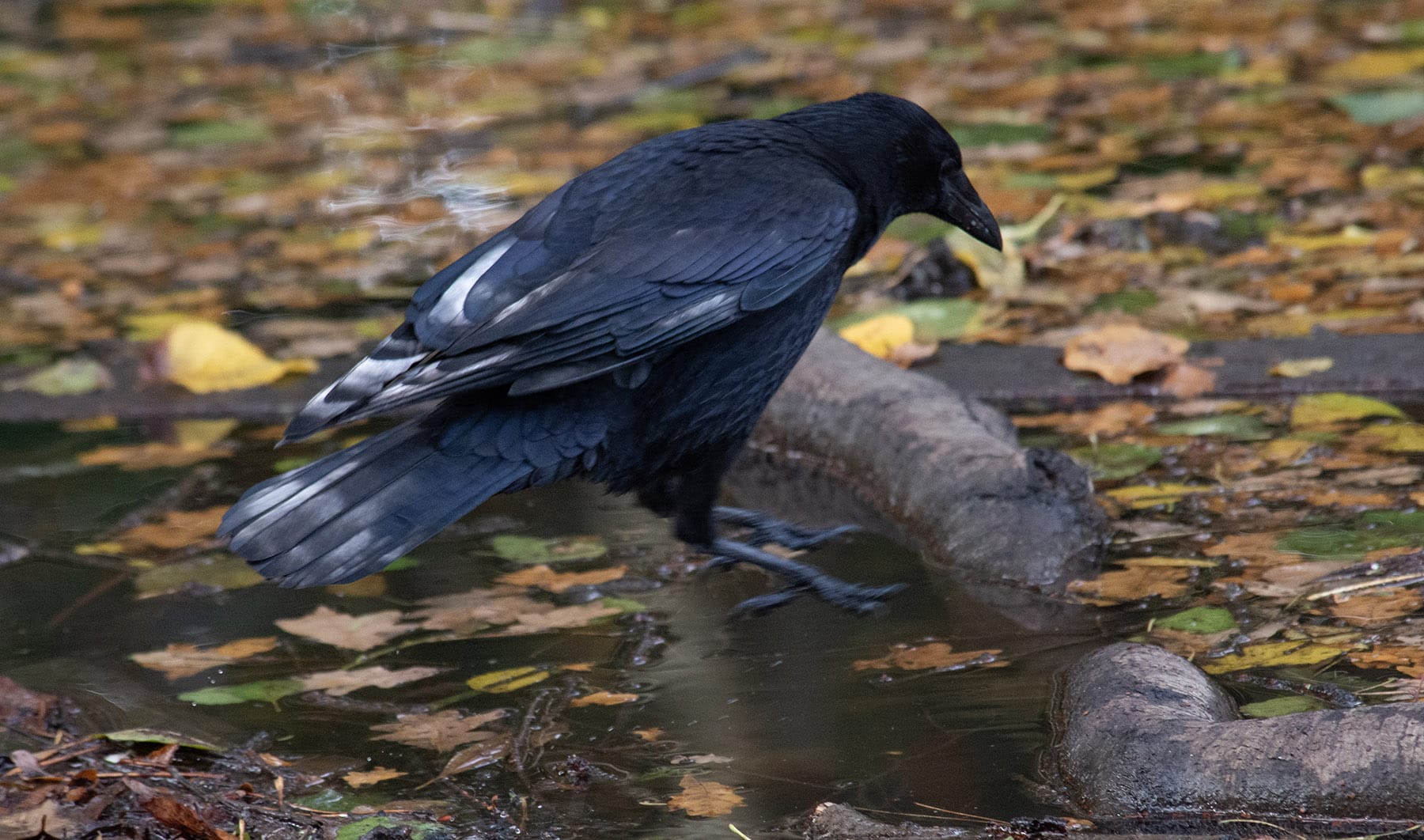
He hopped off the weir edge onto a log. Maybe the leaves were better there? Again, he stared at the water. Intently. Reminding me of the herons when they are hunting. Very still, very intense, their eyes seeing things, sensing things far beyond our abilities. Then bam! The crow stabbed through the water surface again, came up, this time triumphant with a…
FISH???!!!
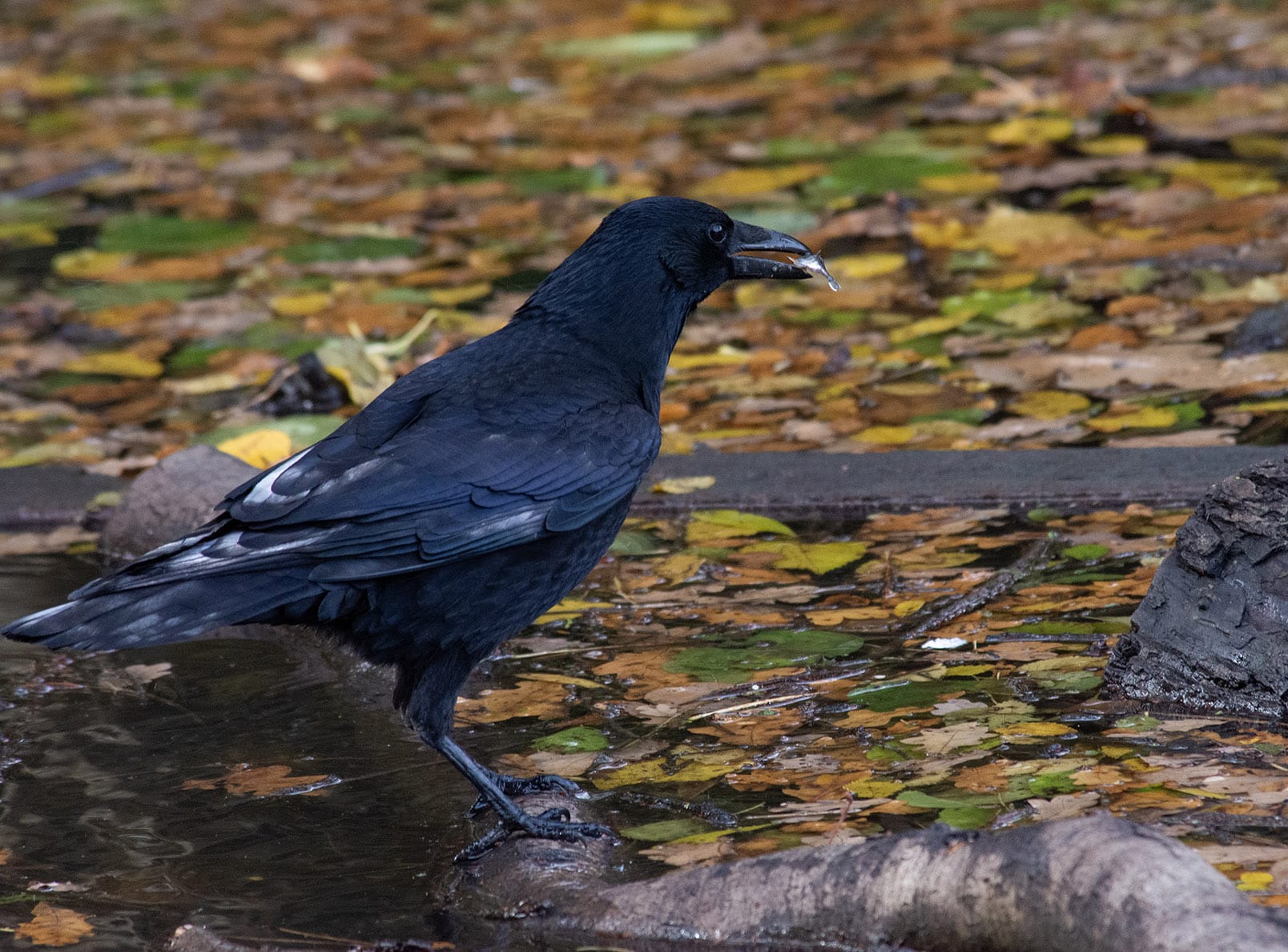
The crow was fishing???!!!
We know crows are clever. They remember faces – they know who is naughty and who is nice, like good old St Nick. They remember precisely where they’ve stashed a bit of extra food a few days prior. They are adaptive and flexible when it comes to what they eat and how they procure it. They are known to scavenge, they will eat the eggs of other birds, they will sometimes hunt other birds. They have been observed picking up crabs and molluscs and smashing their shells by dropping them onto cliffs. But I’ve never heard of a crow fishing.
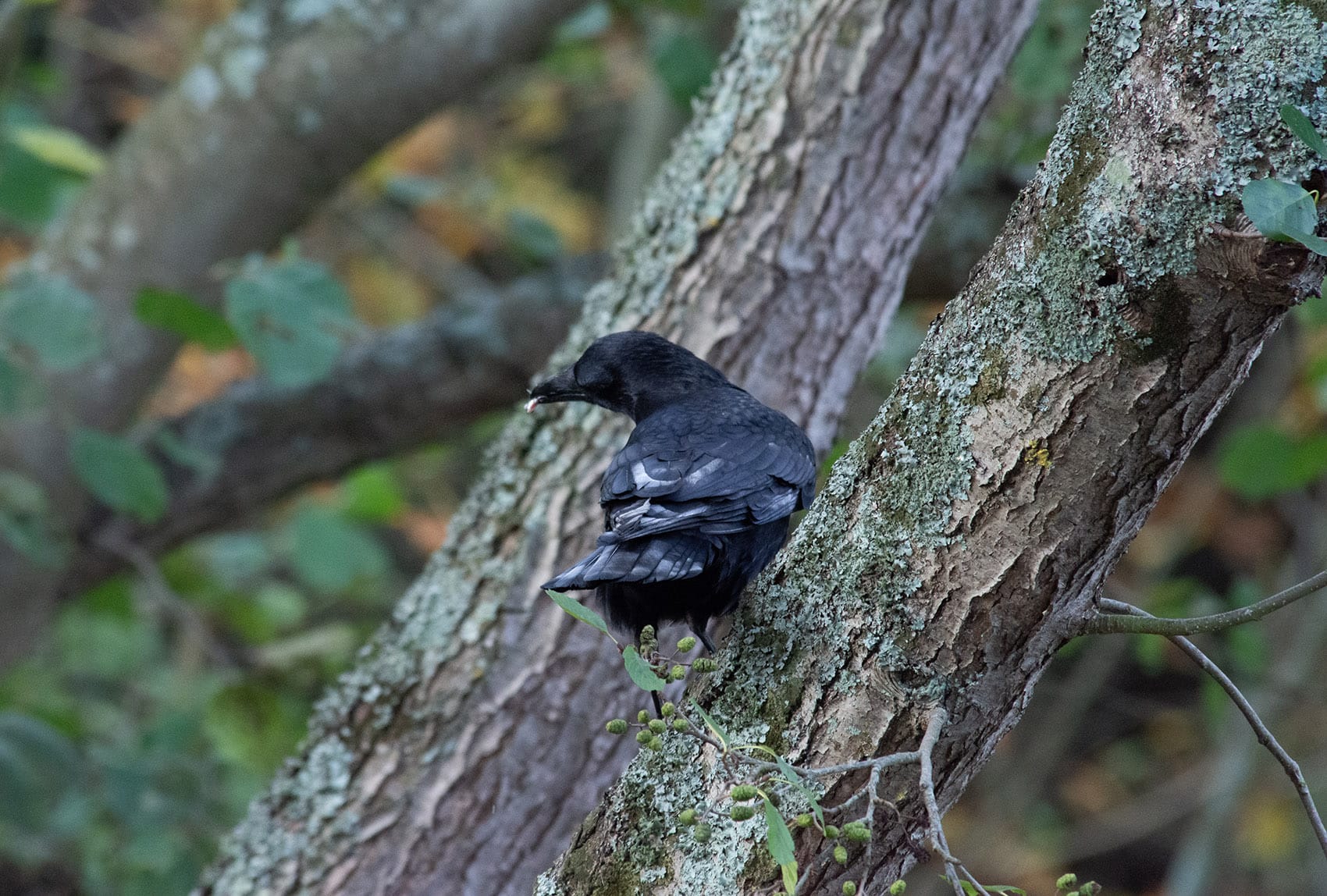
So back to the books and the interwebs I went to see if I could find anything on this behaviour. There was very little. The BTO website mentions they will eat fish, but nothing about how they actually procure the fish. Rev Morris, in his book, British Birds, also mentions that they like fish and then tells an anecdote of how he saw a crow pick up a fish stranded on the shore after high tide. That is scavenging. That is not fishing. As far as I can find, there is no information, no observations on crows intentionally fishing like this one at the lake.
And then when I went through my photos, I noticed something else. The fish I had seen him catch was not his first. An earlier photo, when he was still on the weir, while blurry and grainy, shows him with another stickleback. It was certainly not a one-off-accidental-hey-I-got-a-fish-lucky-me thing. This was an intentional behaviour.
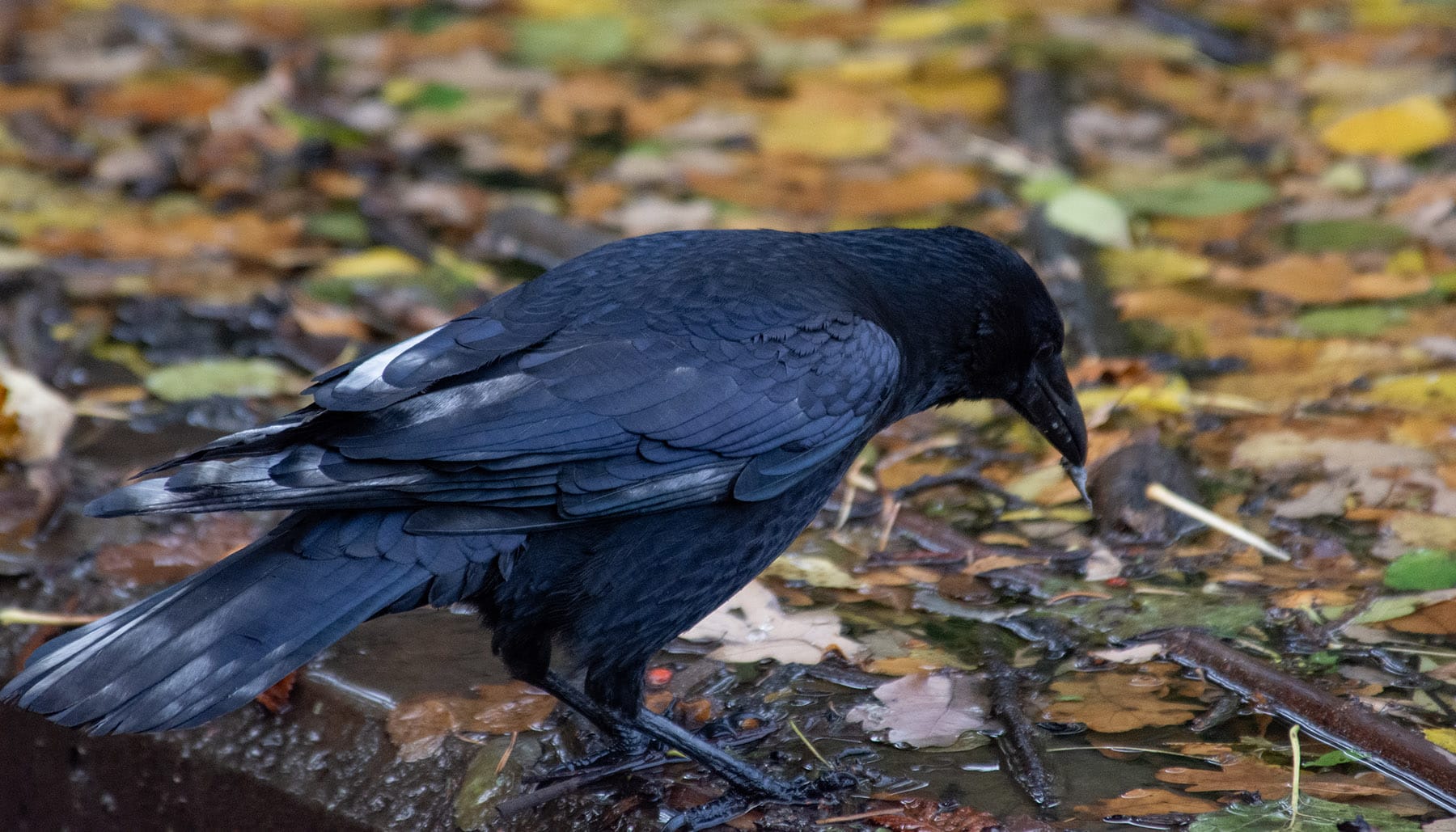
Between the kleptoparasitic moorhens, the dragonfly-hunting grebes and now the fishing crow, something special, or weird, is happening here at the lake. The stickleback fish and the dragonflies may not be so excited about it though.
Resources:
Cornell Lab/Bird Of the World, 'Carrion Crow' [website]
Rev. FO Morris, 1987. British Birds, London, Spring Books [reprint]