Notes from a Lake: The Mandarin Ducks
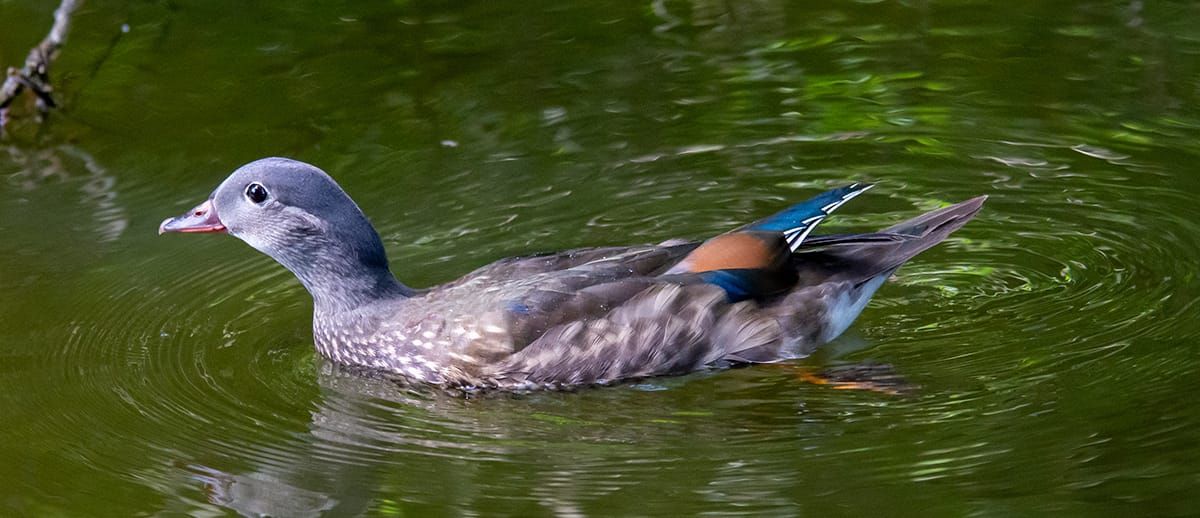
While I was photographing a particular Mandarin duck the other day, I was hoping that I would have a positive Plucky update. I spotted what I thought was a young Mandarin duck, a male fledgling starting to get his adult colourful plume. He was by himself, swimming where I had seen Plucky swim before. He ran his beak through the water, looking for something to eat, nibbled at the overhanging willow, jumped up here and there, trying to nab a dragonfly.
I watched, followed him round the lake and clicked. Hoping against hope that this was Plucky. I took a LOT of photos as I ran around the lake.
But there was a niggling doubt. Would Plucky, or indeed any of the Mandarin ducklings born around the same time, be so adult-like? So advanced in their fledging? Was this actually a male? Maybe a female? But what was that orange? I’d never seen that on a female. So. Many. Questions.
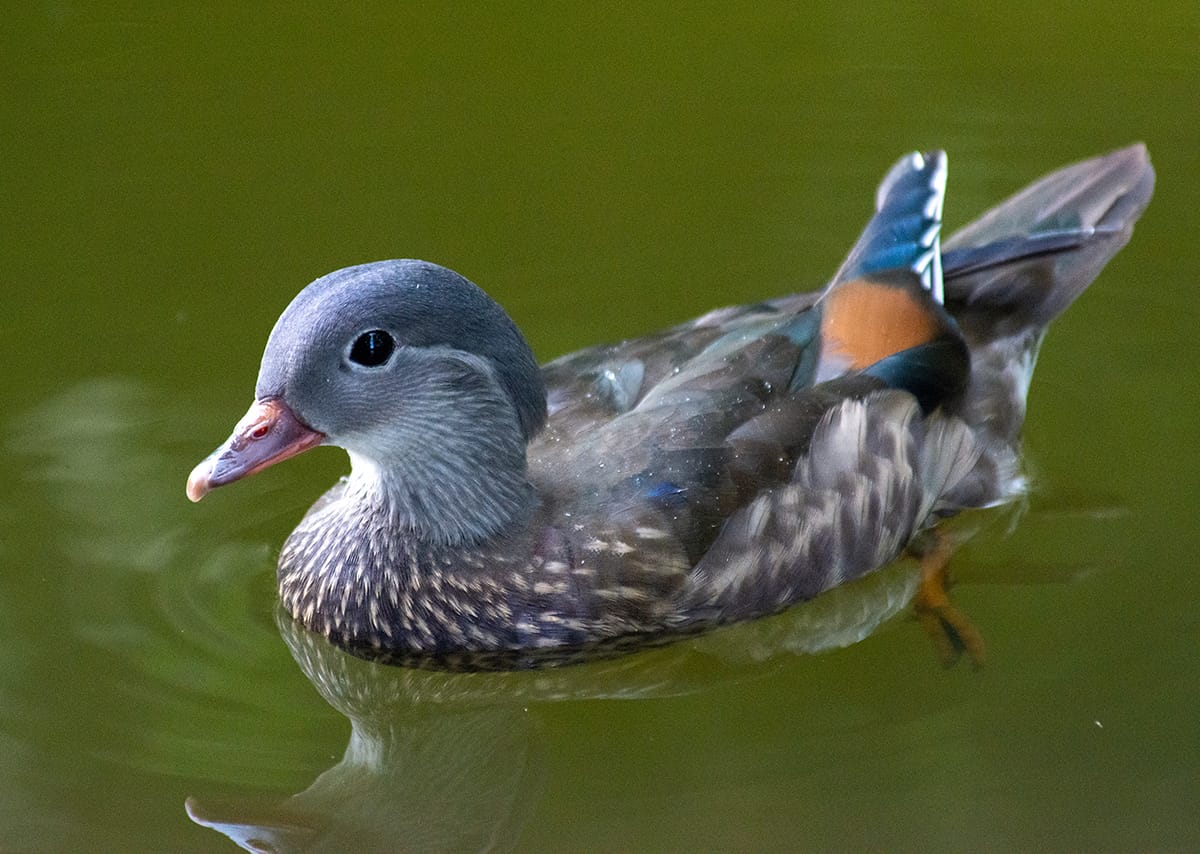
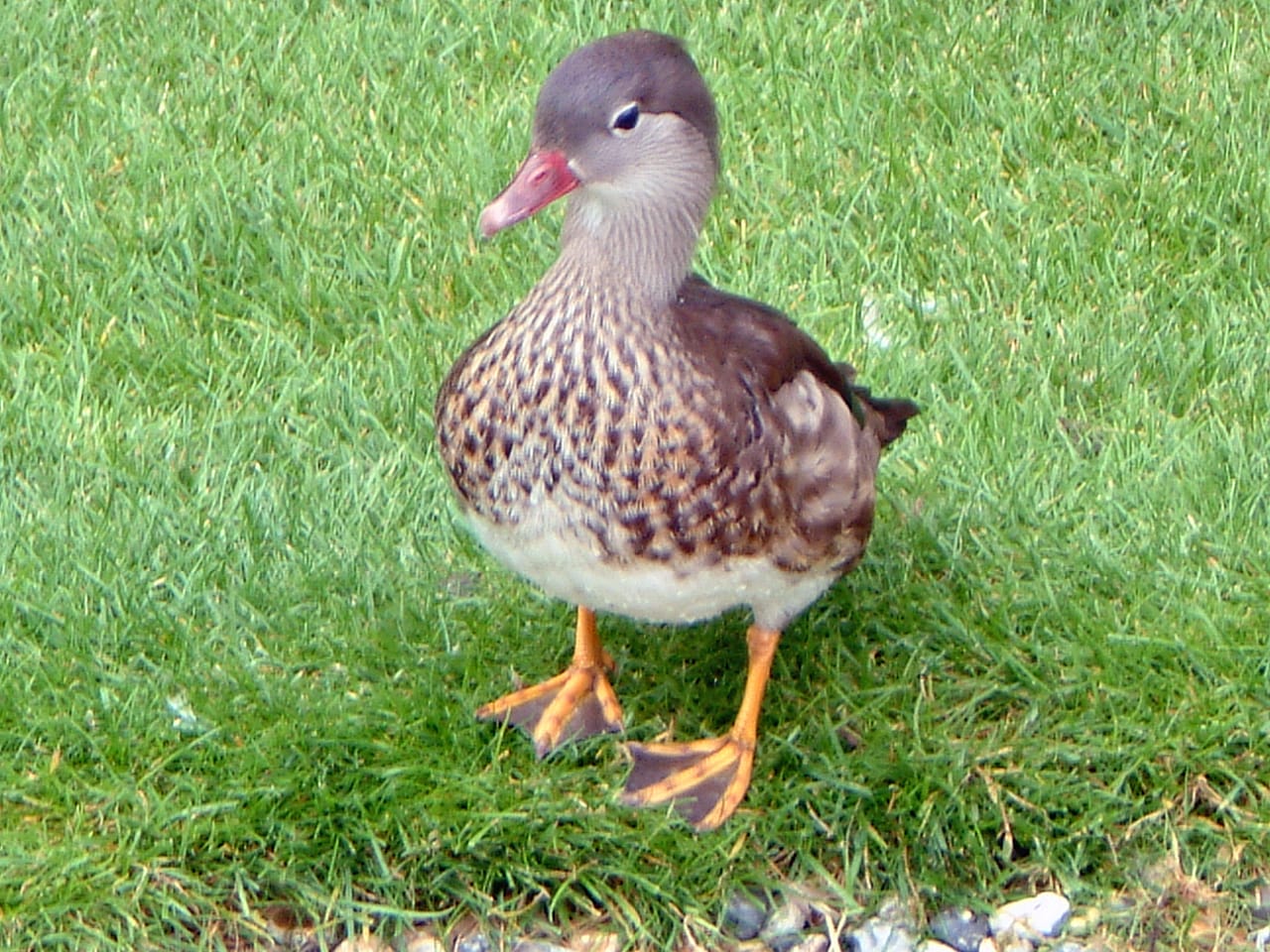
Back home, I went through the photos. The doubts remained. I looked through my various bird books – very little on Mandarin ducks. I remembered reading somewhere about males in eclipse phase. So I tried to find some reading on that. Even less info - mainly the writers just mentioned that males are 'more muted' when in eclipse. Just remember that phrase - more muted. So onto the old interwebs for info and images. Wikipedia came through with an image of a male in eclipse. More muted? Talk about the British understatement - this is a complete metamorphosis!
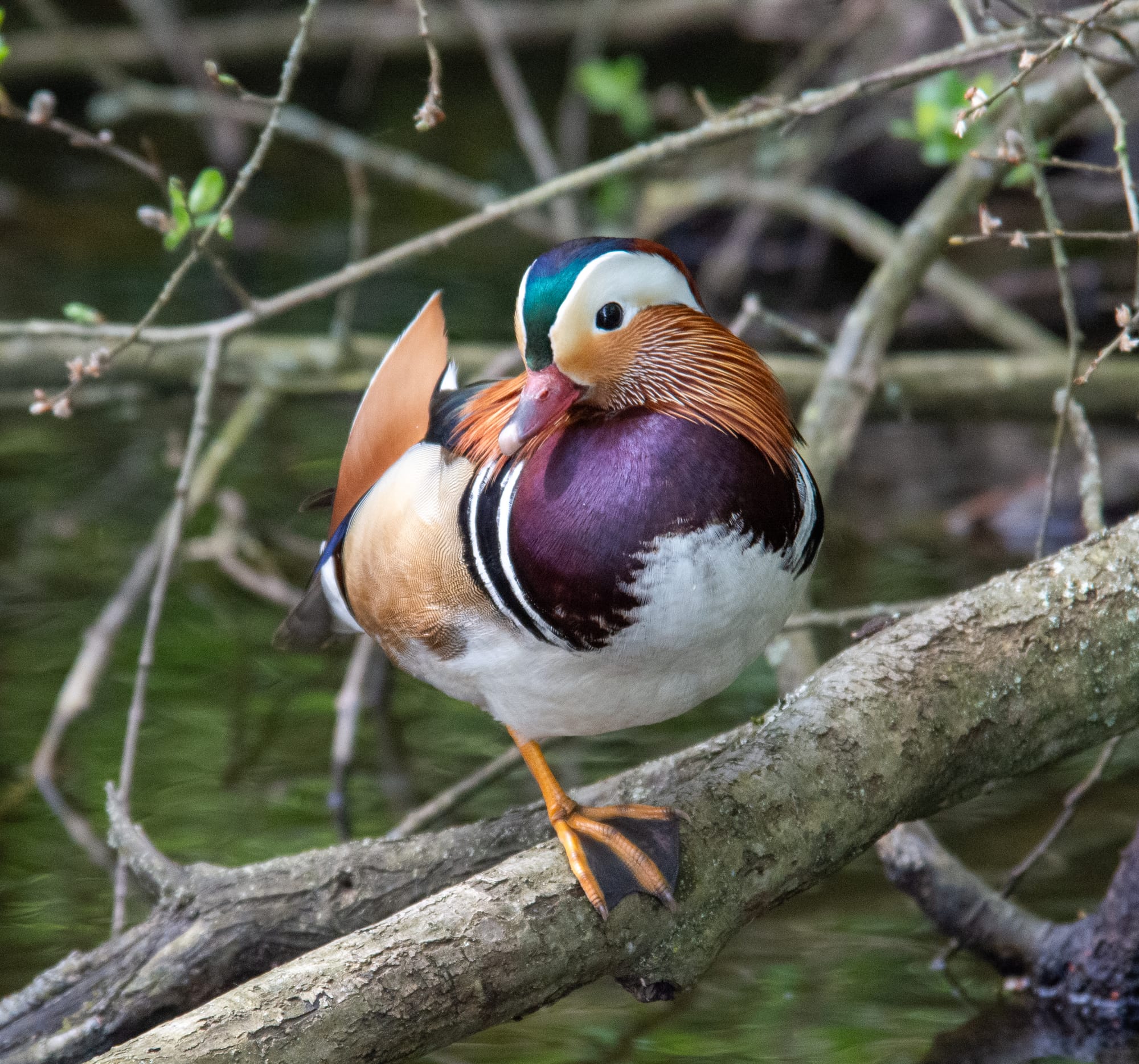
So here’s a male Mandarin duck in full breeding mode. Talk about bling. Wowser. Right? Male Mandarin ducks really pull out all the stops to attract mates.
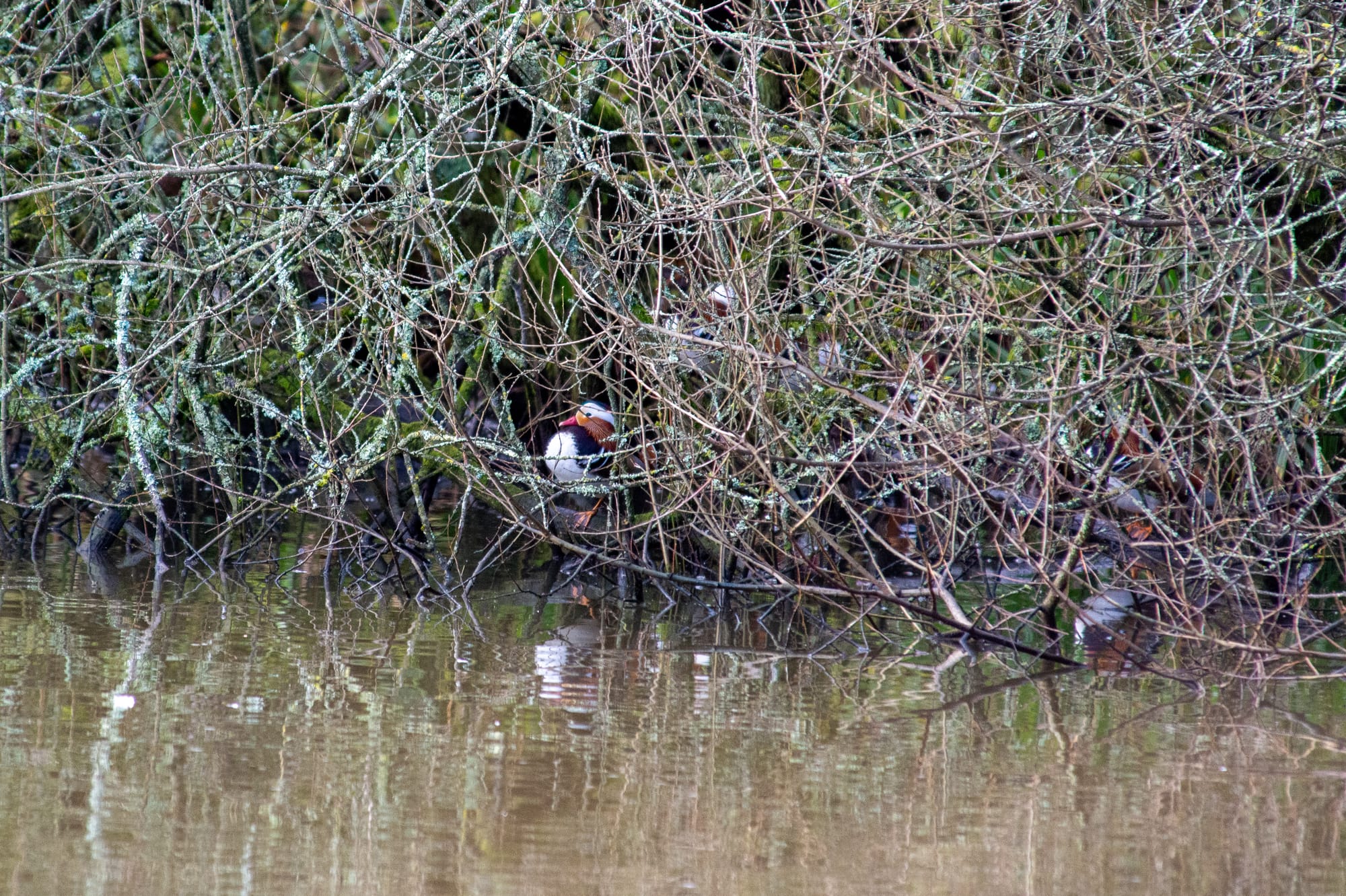
They are also really easy to spot. I’ve taken many a ‘record’ shot of the vegetation behind the lake, the wooded wetlands, and spotted the male mandarin ducks, trying to 'blend' amongst the vegetation. Count the ducks!
Once the breeding season is done, they moult and take on female colouring - grey brown feathers, white mottling, grey face with white eyeliner. Outside of a red beak and a bit of blue on their wings, they are difficult to differentiate from the females. This transformation certainly helps them blend into the background far better so they don’t attract prey to their young ones.
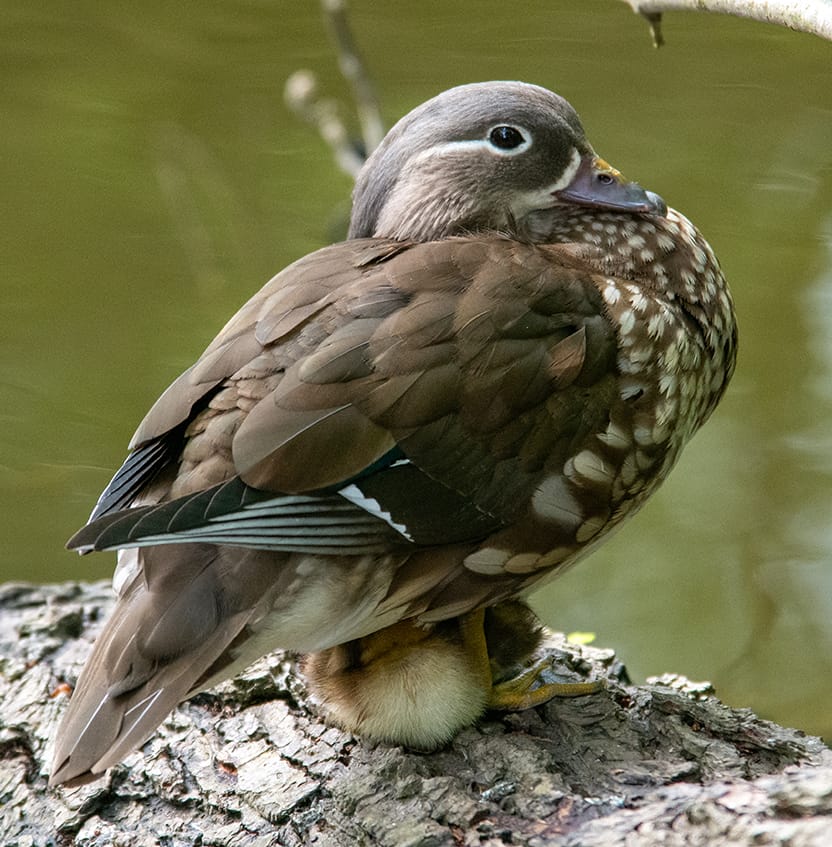
This male, however, decided he wanted to keep a little bit of his old clothing – a patch of the orange ‘sail’ from his wing feathers. And honestly, I can’t blame him.
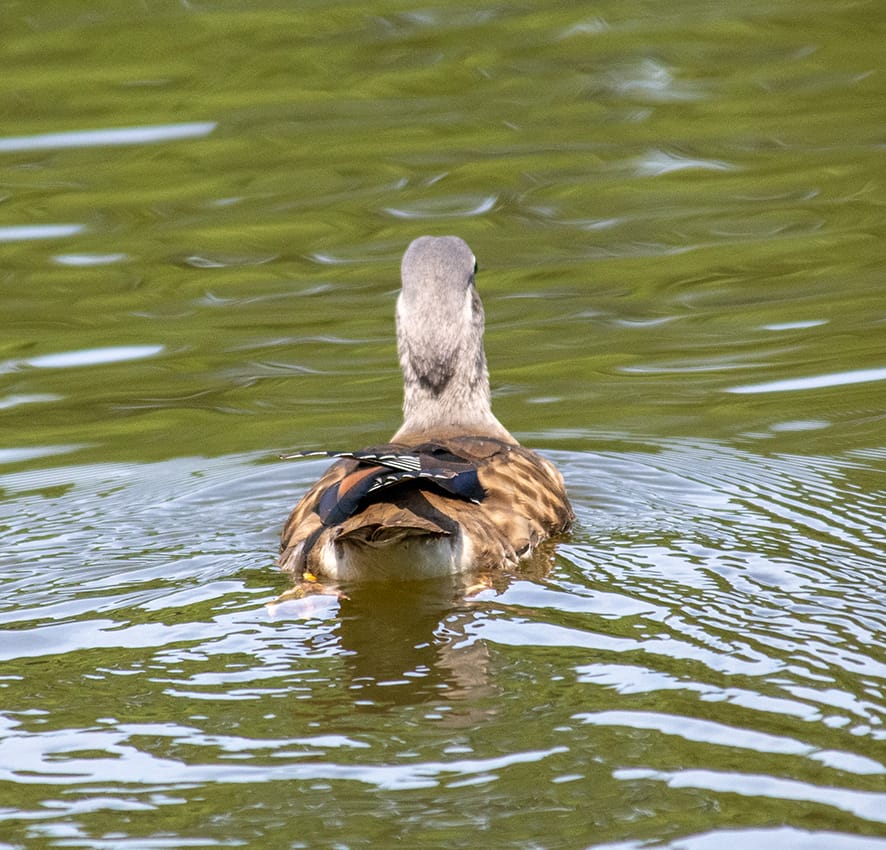
So, no Plucky yet. But it was really interesting to see what ‘more muted’ really means – I guess every day is a school day!