Notes from a lake: The curious case of the Little Grebes
First it was the Moorhens acting in a strange manner, now it's the Little Grebes acting in very curious ways.
First it was the Moorhens acting in a strange manner, now it's the Little Grebes acting in very curious ways. They hunt dragonflies and steal fish from each other - two feeding techniques I haven't seen previously...
Grebe, the Hunter
Back in September, I ventured out with my friend Krie. It was a warm sunny day and the Common Darter dragonflies were out in abundance, males and females connected tail to head, spraying their eggs out over the lake. A curious way to ensure the next generation of darters for sure, but also well known and documented, and interesting to observe.
We watched these magnificent creatures do their little acrobatic dance across the water. Up, down, zig-zag, flash of tail, separation, together again, up, down, well, you get the picture.
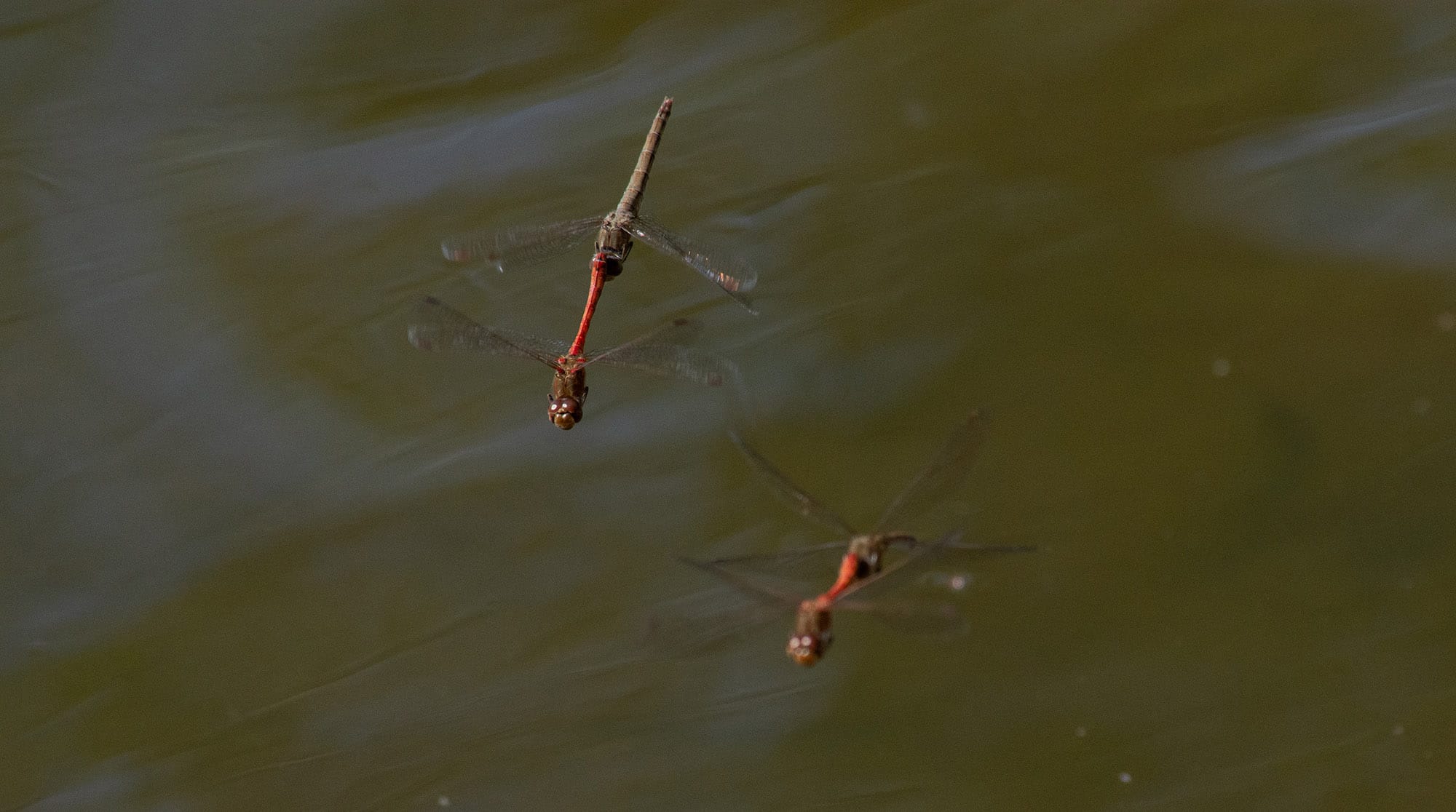
We weren't the only ones watching them, however...
While I tried to grab a few shots of the acrobatic insects (not easy!), Krie was watching another drama unfold. 'What is that bird doing?' she asked. 'I swear he's hunting the dragonflies.'
'Oh, yeah, they do catch them in their beaks as they fly by,' I answered casually.
'No, I mean, hunting. I swear he's waiting underwater...'
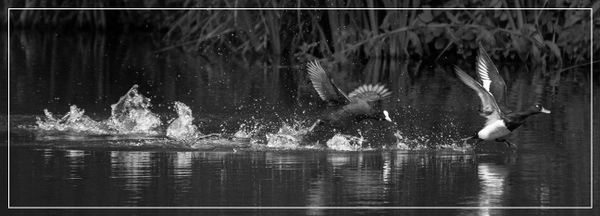
At that moment, I am not sure what happened. I was photographing the dragonflies, saw something in the corner of my eye, swung my camera round and blindly snapped. Suddenly there was a splash and one of the pairs of dragonflies that I had been trying to photograph was in the Grebe's mouth! A dramatic ending to their dramatic performance.
I glanced at my camera screen and realised that I had caught the Grebe, lurking, waiting, under water, just before he flew up and out and grabbed the poor dragonflies. Krie was right - he was actively hunting, not just catching them as they flew past randomly.
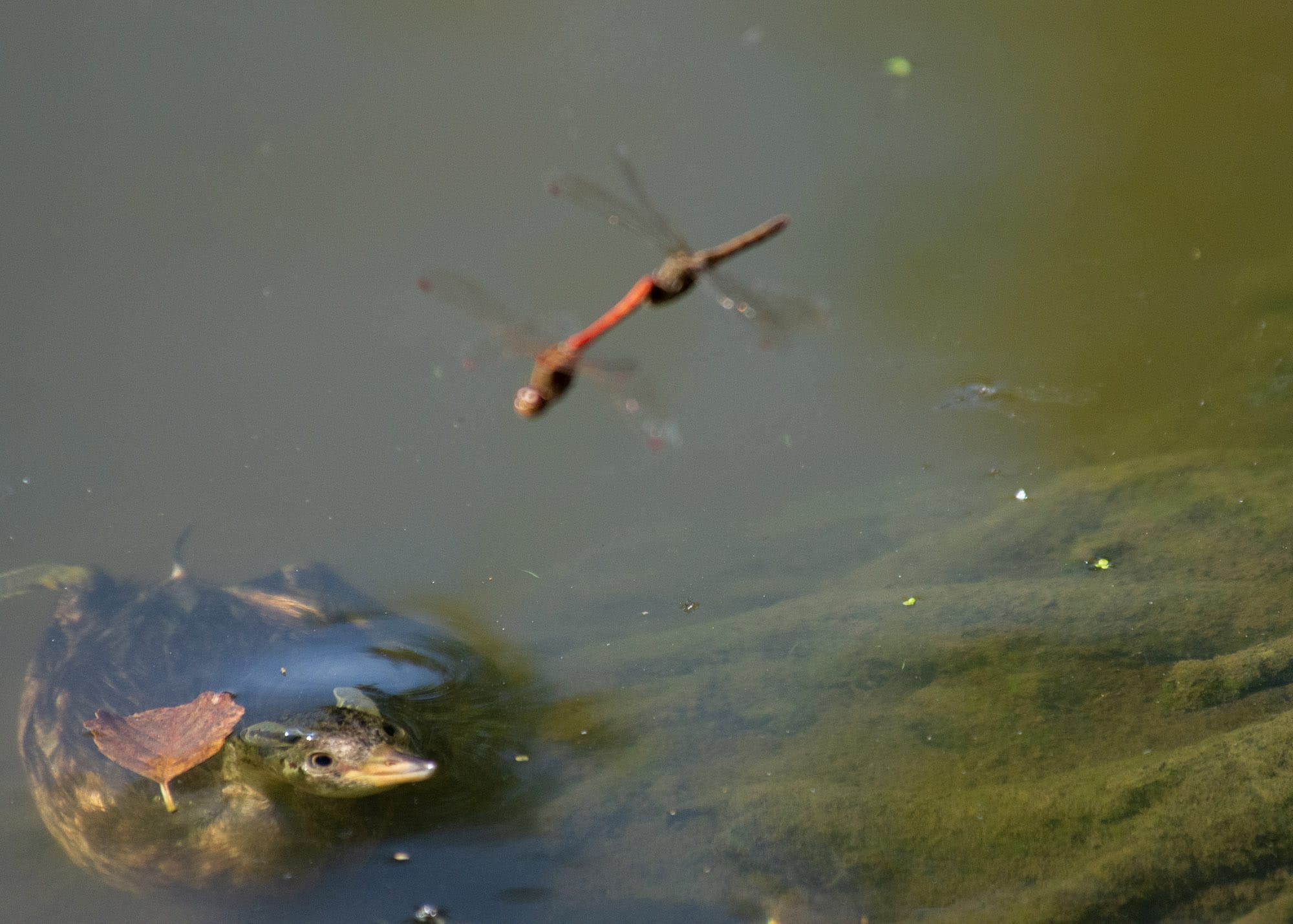
Now, Little Grebes, as we know, do engage in some hunting. After all, they dive down and catch fish, and this must include some looking for, chasing and catching their prey underwater. Do they wait underwater then, for fish as well? Watch and wait til a stickleback swims past? And are they applying that technique to dragonflies? This Little Grebe was certainly aware that there were a number of dragonflies in this spot and he was there, under the water, watching, waiting...
I did some research - looked on the old interwebs, read through some books and articles - but could not find anything that described this behaviour. A brief mention of hunting for fish, another one about them catching insects on vegetation or the water surface. I've seen them catching dragonflies on the fly as it were. But nothing like this behaviour - watching from under the surface of the water and then leaping up and grabbing their prey.
I think our Grebes may be a bit special.
Grebe versus Grebe
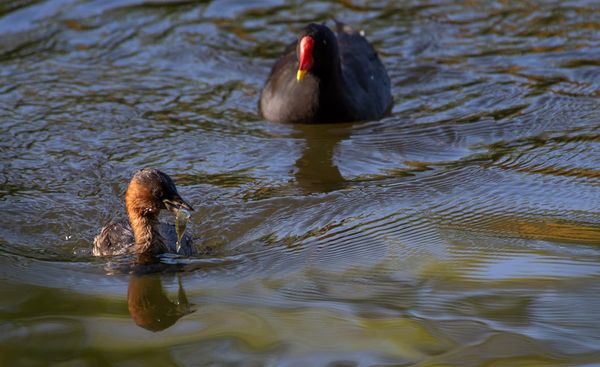
Since writing the blog about the Moorhens and the Little Grebes a few weeks back, the Moorhens seem to have calmed down and ceased their fish-stealing antics, instead paddling around serenely in a Moorhen-like way.
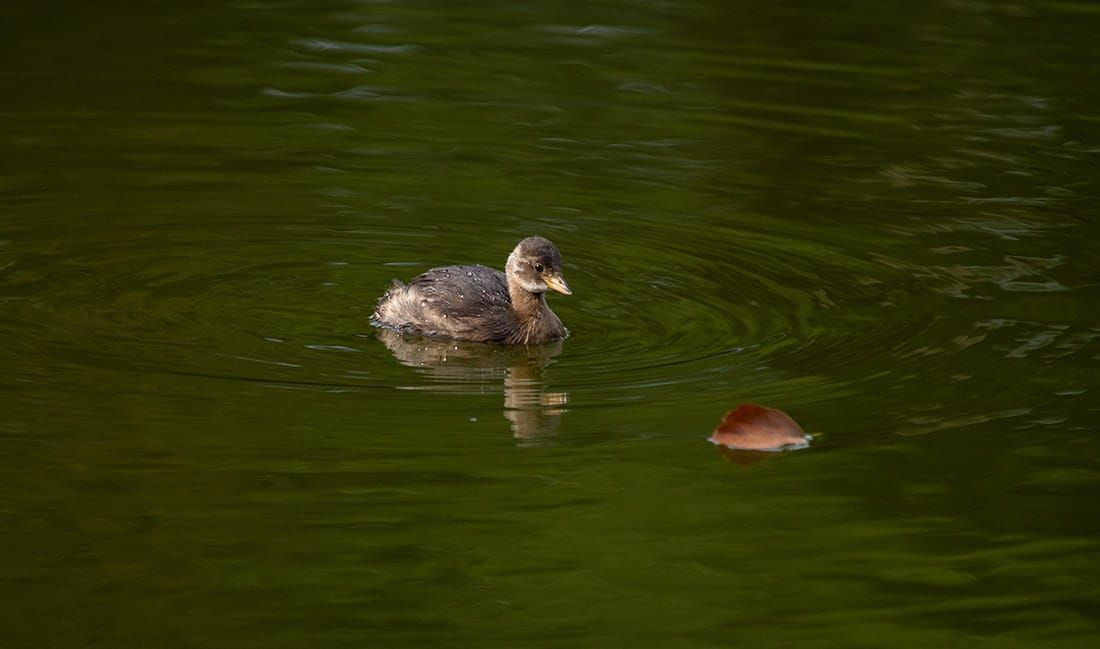
The Little Grebes parents are still feeding the 'kids' from their last brood. It strikes me that it's a bit like feeding 18yos. They are perfectly capable of getting their own food but still chase after their parents, screaming for fish and other lake delicacies. And Mama and Papa Little Grebe tirelessly oblige them. Down, up, feed, down, up feed - an endless cycle.
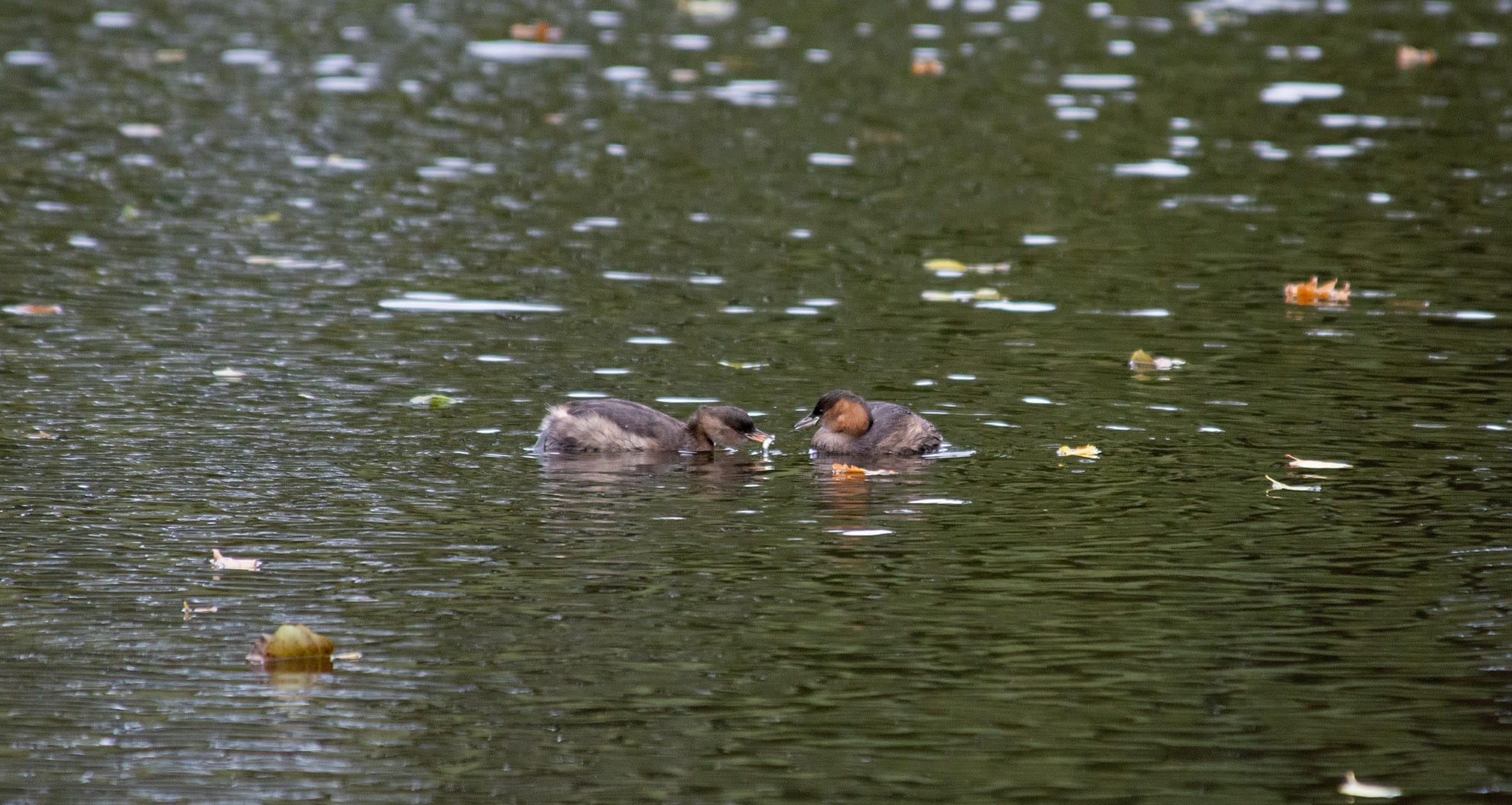
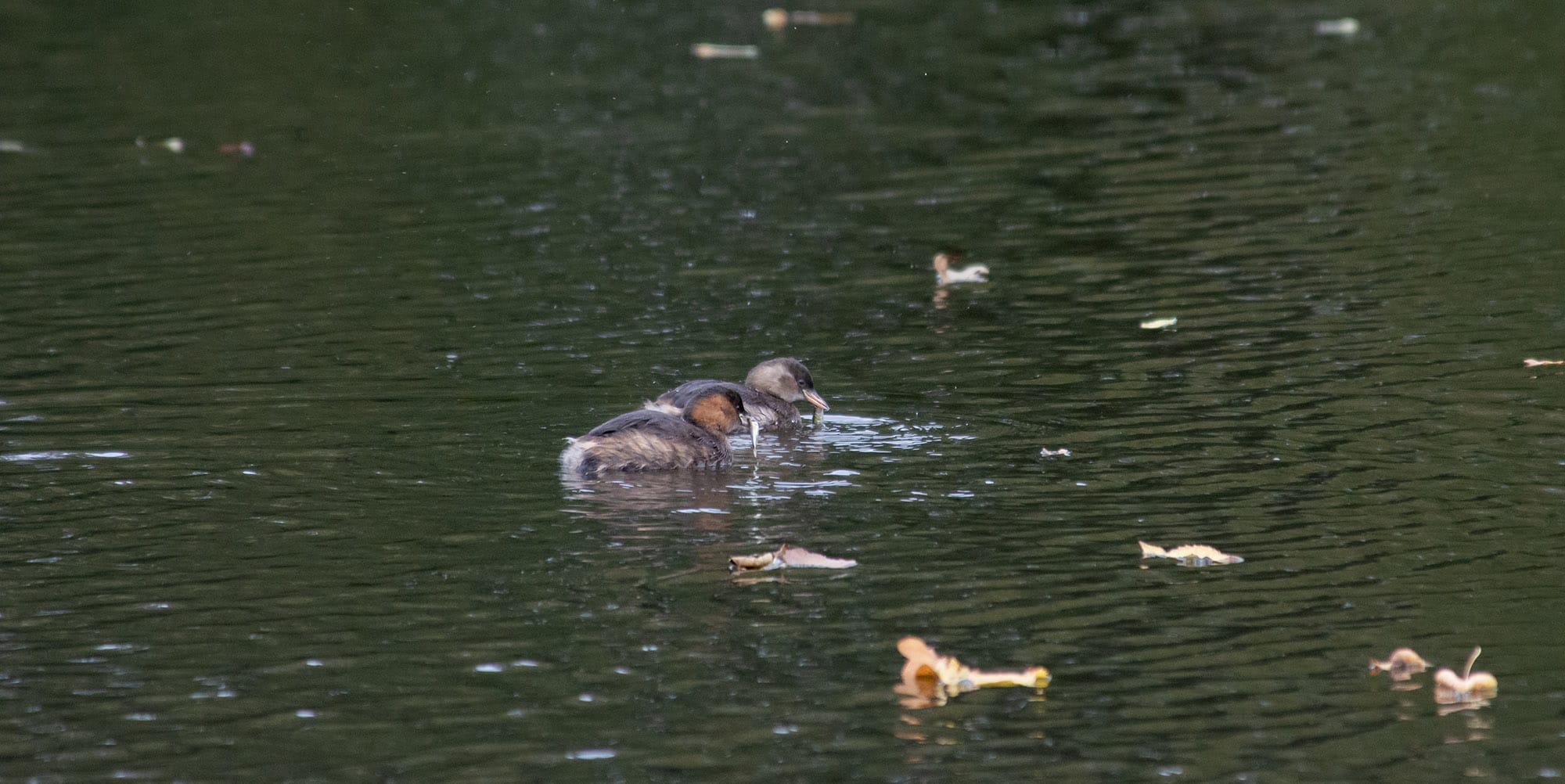
But I did notice another interesting behaviour, one that I hadn't seen before with the Little Grebes. Kleptoparasitism...
So, one of the brood 3 chicks saw that one of the other Little Grebes (not sure which brood or if immature / adult in eclipse) had got himself a fish for lunch. A nice little stickleback he was planning to eat. The little one had other ideas...
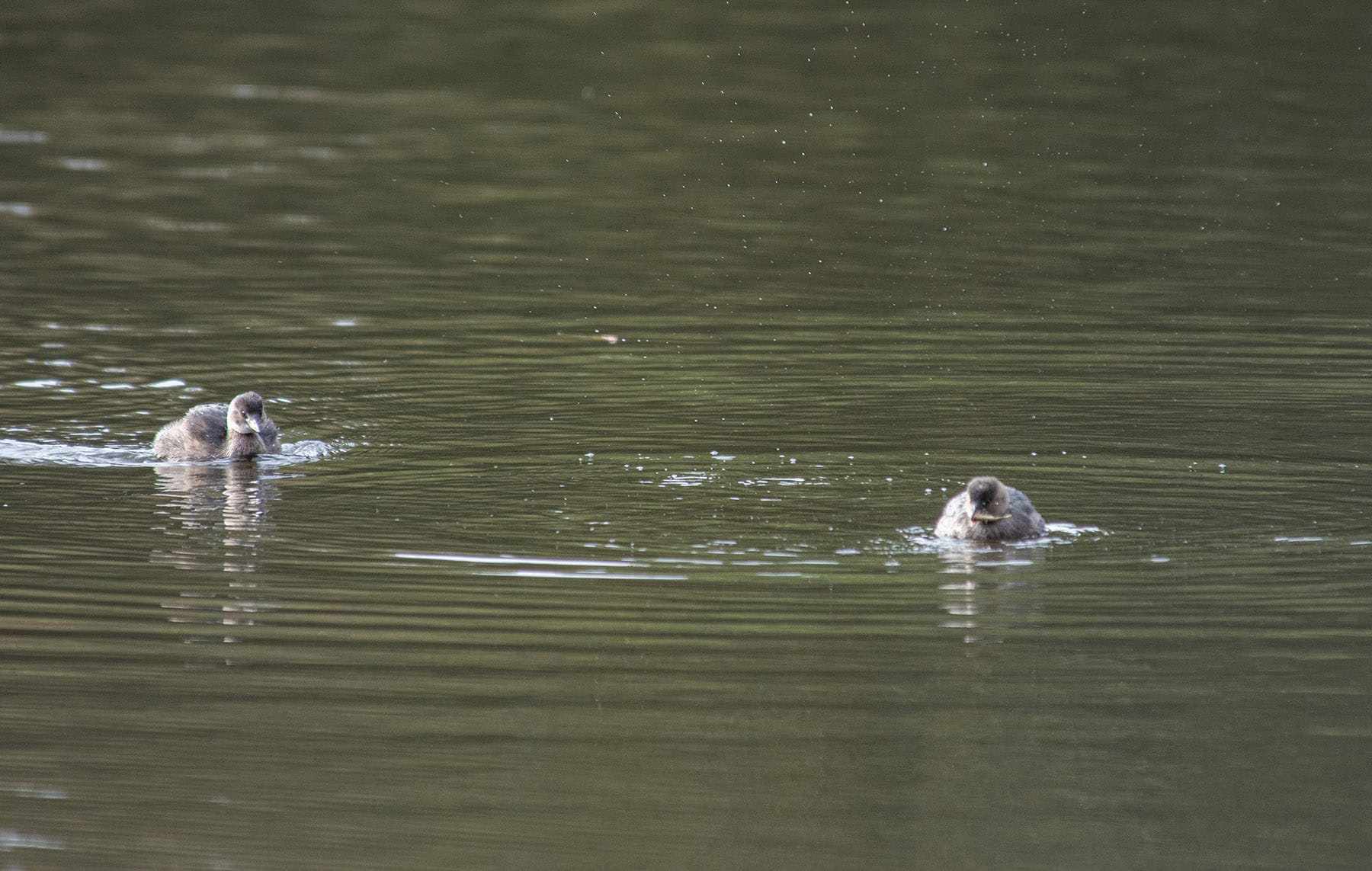
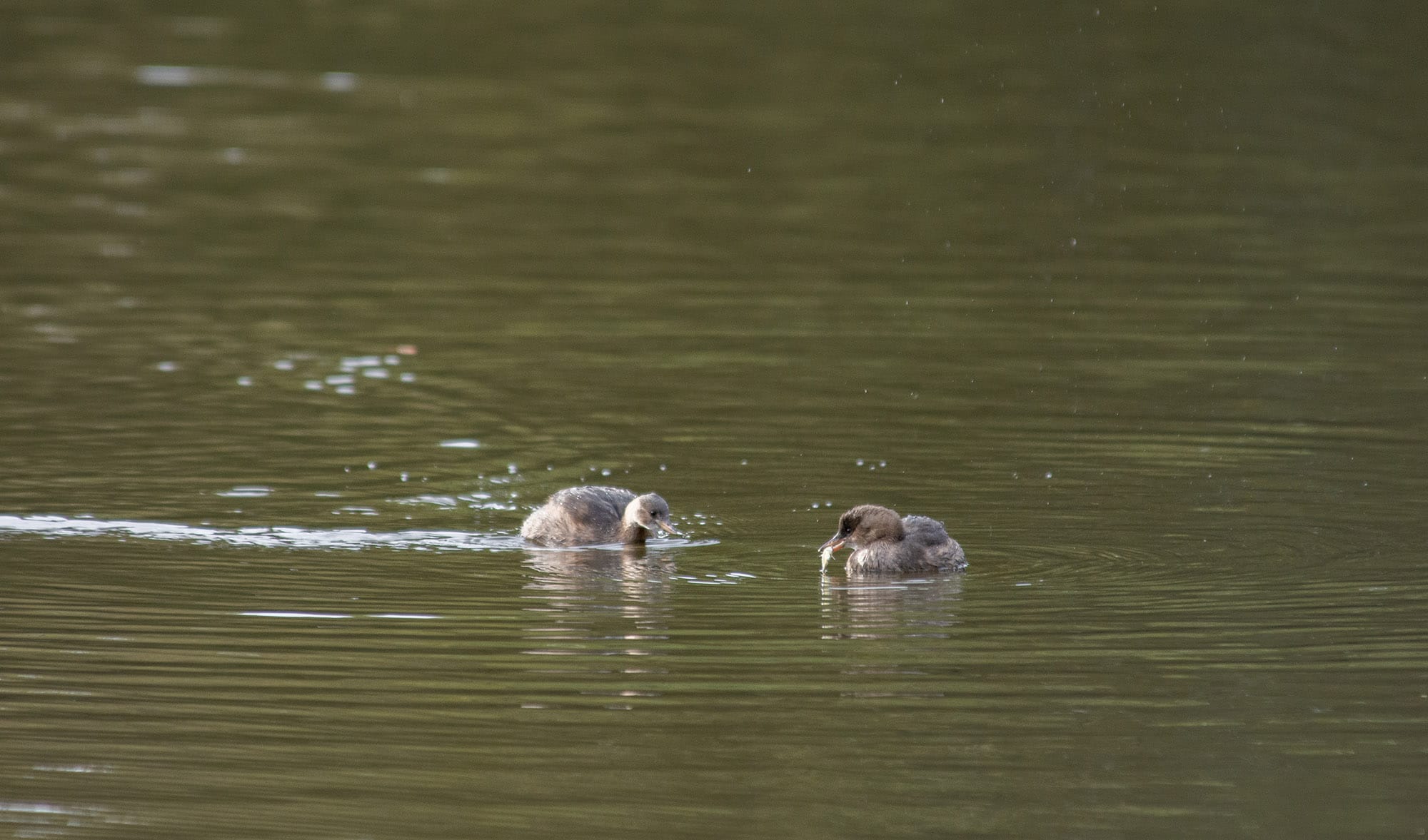
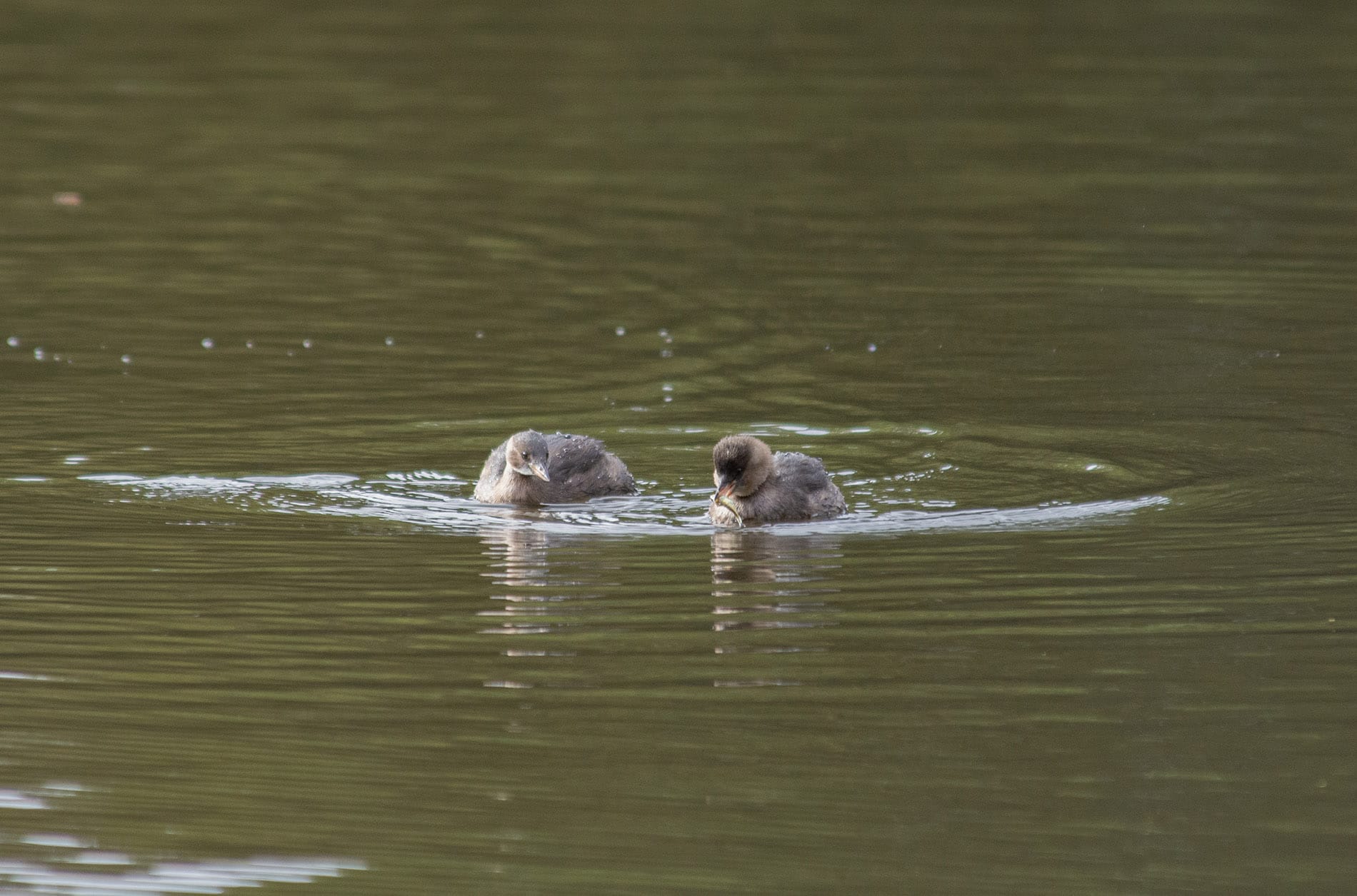
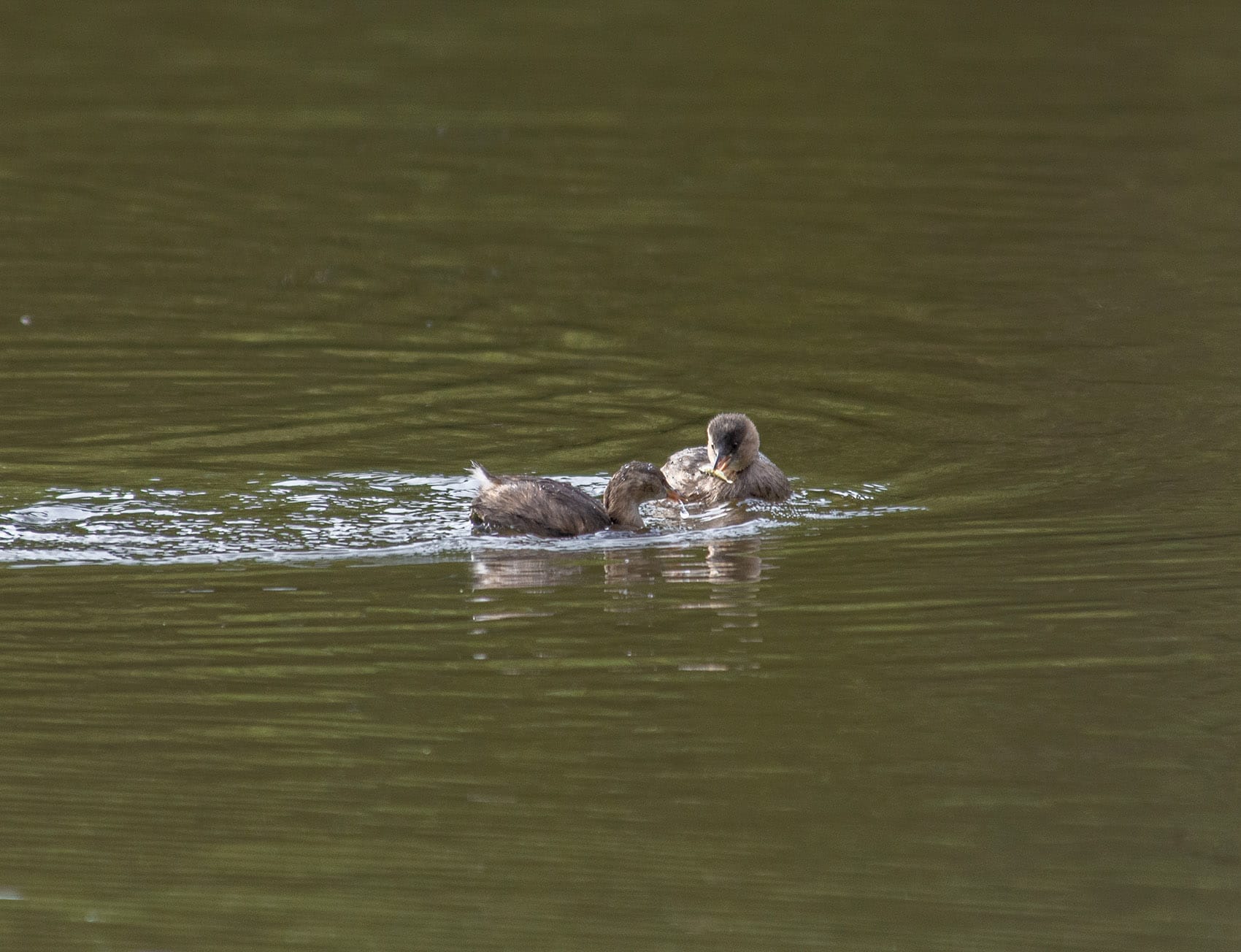
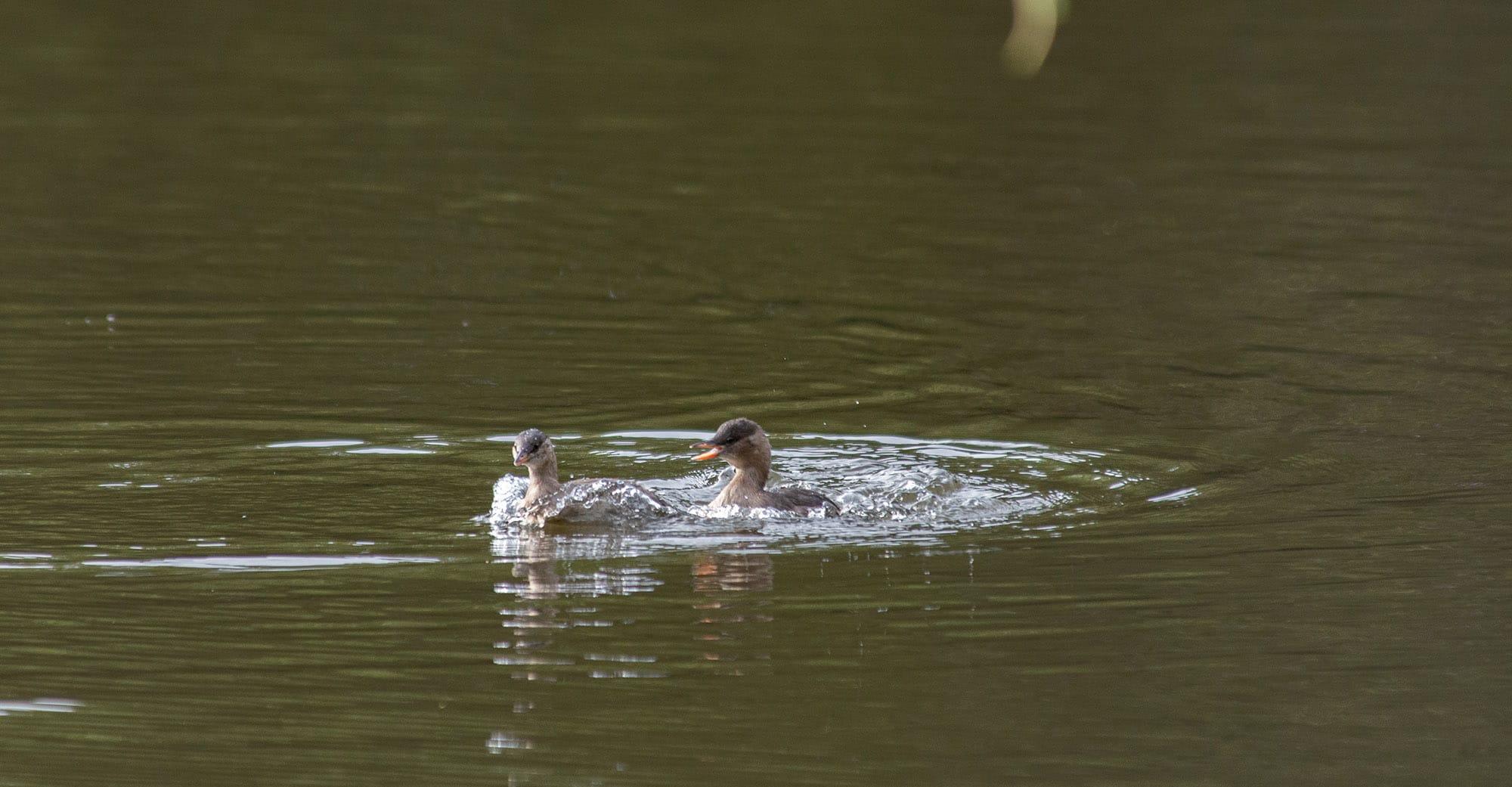
The youngster wanted that fish and managed to grab it from the other Little Grebe. And the other Grebe was maaaaad!
So this leaves me wondering. Did the Little Grebes learn this behaviour from the Moorhens? Or is kleptoparasitism a Little Grebe behaviour, and did the Moorhens learn from them? Again I found nothing in the references.
Are the lake Grebes just weird?
That's the question... The Moorhens seemed to have adapted their subsistence strategies on the lake. Perhaps the Little Grebes have too? So the Grebes and the Moorhens are both weird?
Or maybe it's the lake - something in the water, as my daughter says? Because it's not just the Grebes and Moorhens. There's also the crows. They are a bit curious too. But that's for another time!
(Text and photos © Anke Marsh)